







Are White Button Mushrooms Wild or Cultivated?
Have you ever wondered whether the white button mushrooms you see in supermarkets are wild or farmed? Here's the short answer: about 99% of the white mushrooms on the market today are cultivated.
The white button mushroom — scientifically known as Agaricus bisporus — gets its name from a unique feature of its gills: its basidia typically bear two spores instead of four, which is unusual among mushrooms. While the earliest Agaricus bisporus was discovered in the wild, it didn't stay that way for long. As early as the 17th century, the French developed successful indoor cultivation techniques, marking the beginning of large-scale production.
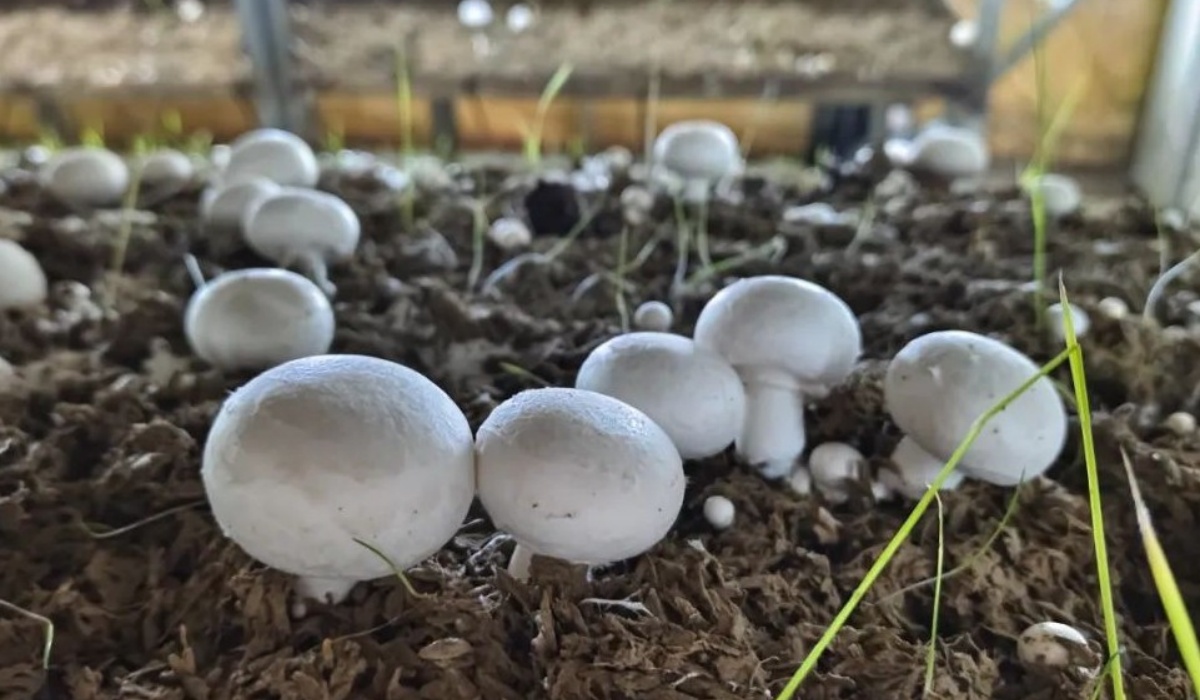
Today, white button mushrooms are grown under highly standardized systems, including carefully formulated compost, strict humidity and temperature control, and selective breeding. Thanks to centuries of refinement, the cultivation of Agaricus bisporus is now a mature and efficient industry — making it one of the most widely produced and consumed mushrooms in the world.
Why Some Mushrooms Are Cultivated and Others Aren't
You might wonder — if we can easily grow button mushrooms, why can't we do the same for more expensive wild varieties like matsutake or porcini? The answer lies in their symbiotic relationships and the technical limitations of modern cultivation.
Many prized wild mushrooms — such as matsutake, porcini, and termite mushrooms — grow only in association with specific trees. This relationship, known as mycorrhizal symbiosis, is incredibly complex. The mushroom's mycelium wraps around the tree's root tips, creating a biological exchange system: the fungus provides the tree with minerals and water, while the tree supplies carbohydrates produced through photosynthesis.
Replicating this exchange artificially is no easy feat. To cultivate these mushrooms, one would need to mimic not just the right tree species and soil conditions, but also the entire forest ecosystem — including microorganisms, root systems, and seasonal cycles. In other words, it would require rebuilding a miniature forest inside a factory, something that current agricultural technology cannot yet achieve.
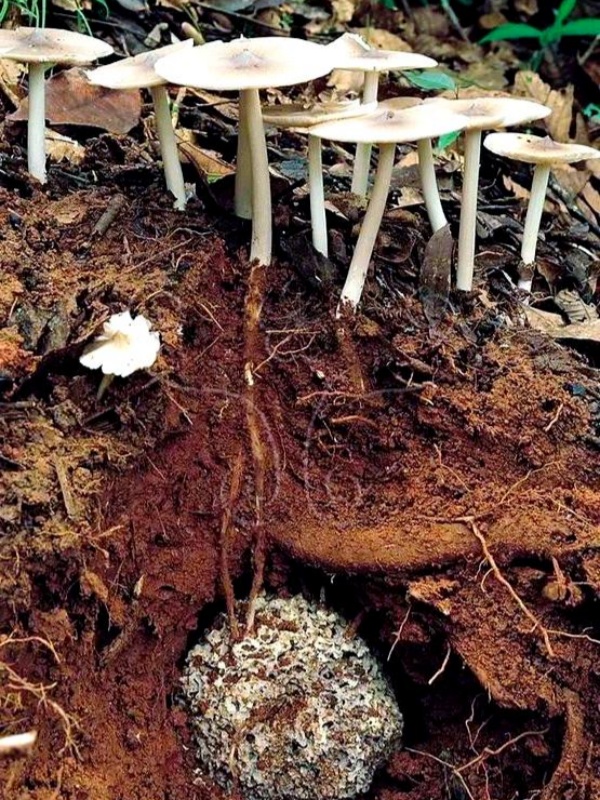
The termite mushroom (Termitomyces), for example, only grows inside termite nests. Its growth depends on the microclimate and biological activities within the colony — an environment nearly impossible to reproduce under laboratory conditions.
The Challenge of Growing Wild Mushrooms
Some wild species are simply too selective about their environment. They require specific temperature, humidity, soil pH, and microbial communities to appear in a precise sequence. Take the morel mushroom (Morchella), for instance. While scientists have made progress in recent years, large-scale production remains unstable because the environmental triggers for fruiting are not fully understood.
Truffles, another luxury fungus, are produced through semi-artificial cultivation — by inoculating tree seedlings with truffle spores and replanting them in the forest. However, it can take years before harvest, and success is far from guaranteed.
For many wild mushrooms, researchers still don't fully understand their life cycles — how spores germinate, how mycelium develops, or what exactly stimulates them to produce fruiting bodies. Without this fundamental knowledge, consistent artificial cultivation remains out of reach.
Why Cultivated Mushrooms Are Easier to Grow
In contrast, most farmed mushrooms — including the white button mushroom — are saprophytic fungi, meaning they feed on dead organic matter rather than living plants. They secrete powerful enzymes to break down materials like straw, wood chips, or compost, all of which humans can easily provide.
By mixing agricultural by-products such as sawdust, cottonseed hulls, corn cobs, or wheat straw, we can create the perfect growing medium. These mushrooms thrive in controlled environments and do not depend on complex forest ecosystems. In other words, a clean, well-regulated mushroom house is all they need to flourish.
Smart Mushroom Cultivation at ShunDi
At ShunDi Foods, a leading dried button mushroom manufacturer, we operate intelligent mushroom houses designed for cultivating Agaricus bisporus. Our digital systems continuously monitor and adjust temperature, humidity, light, and air composition throughout every stage of growth.
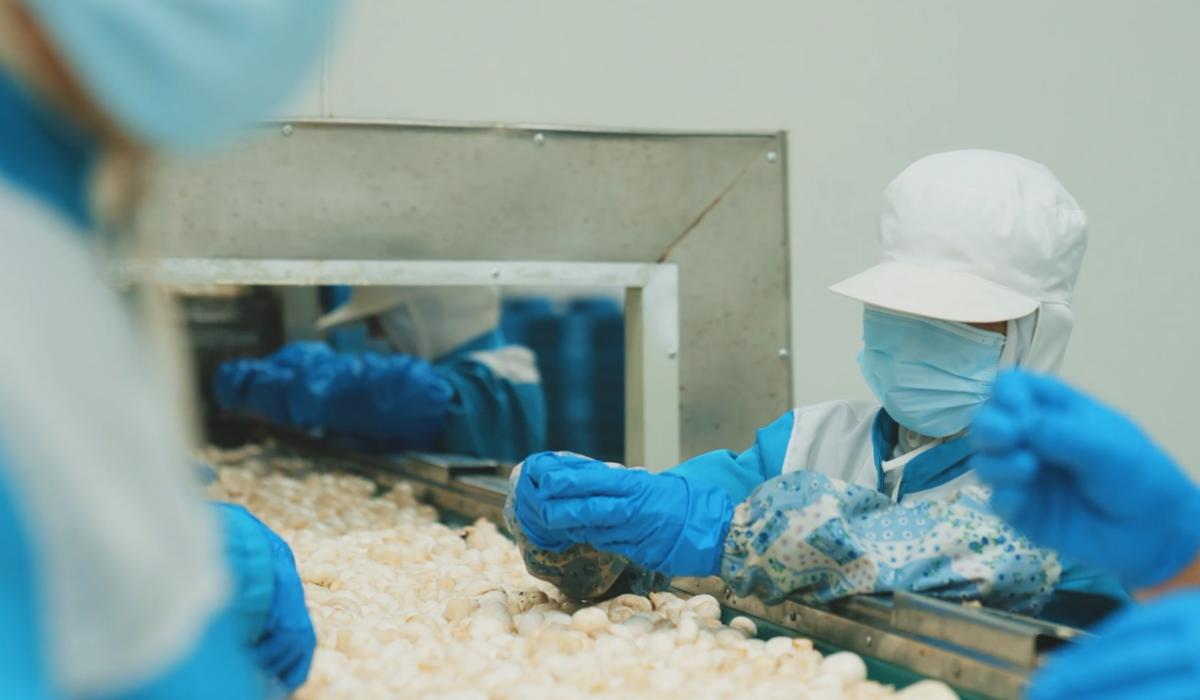
Unlike traditional cultivation, our data-driven approach ensures optimal environmental conditions at all times, delivering high quality, stable yields. Our facilities also feature eco-friendly, energy-saving designs, including advanced air circulation and smart misting systems, which reduce energy and water consumption while minimizing disease and pest risks. This makes production safer, more efficient, and more sustainable. By combining advanced technology with sustainable practices, ShunDi provides global customers with traceable, premium dried button mushrooms, ideal for food manufacturers and suppliers looking for reliable ingredients.