

Fresh Garlic vs. Dried Garlic: What’s the Difference?
Garlic is a widely cultivated biennial herbaceous plant belonging to the genus Allium in the Amaryllidaceae family (formerly classified under Liliaceae). It is typically harvested in late spring or summer, depending on the variety and growing conditions.
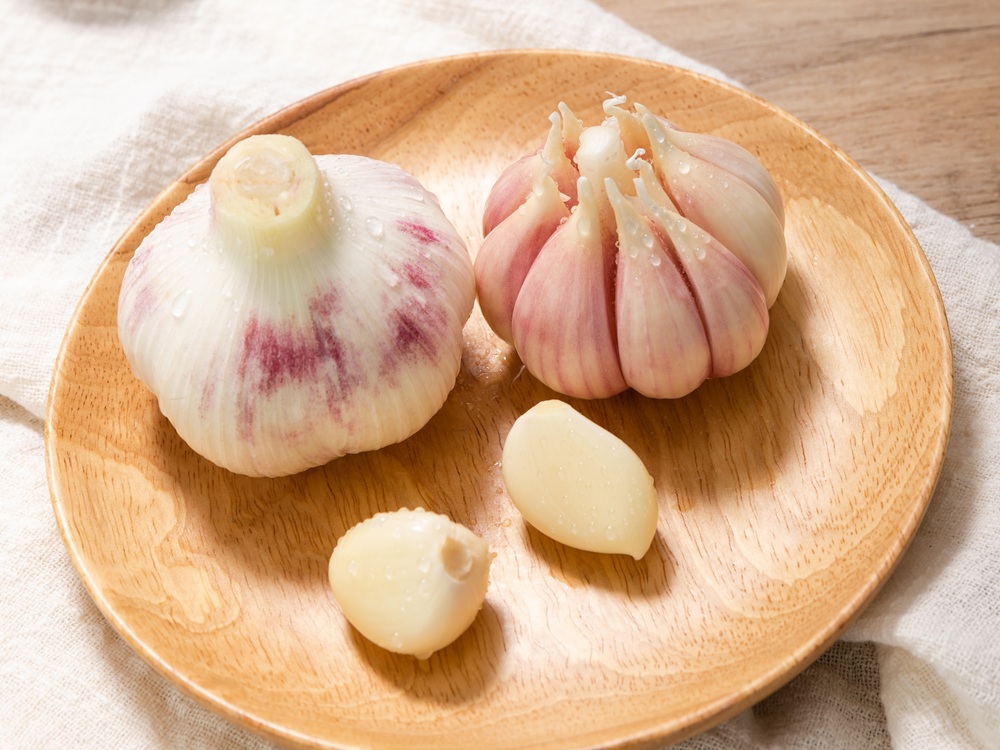
The garlic bulb, its most commonly used part, is oblate or short-conical in shape and covered with a papery outer skin that ranges in color from grayish-white to pale brown. Beneath this protective layer are 6 to 10 individual cloves, symmetrically arranged around a central axis. Each clove is encased in a thin, papery membrane.
At the base of the bulb is a flat, disc-like stem plate, from which numerous fibrous roots emerge. Garlic emits a strong, pungent aroma and has a sharp, spicy flavor due to its high content of sulfur-containing compounds, such as allicin.
Garlic bulbs are generally classified into white-skinned and purple-skinned varieties, based on the outer coloration of the cloves and skins. Both types are used widely in culinary, medicinal, and food processing applications.
Garlic is not only a popular culinary ingredient but also valued as a potent natural remedy. It is rich in essential nutrients, including protein, vitamin E, vitamin C, calcium, iron, and selenium. Among its bioactive compounds, S-allyl cysteine, known for enhancing immune function, and allicin, celebrated for its powerful antibacterial and antiviral effects, are particularly noteworthy.
Scientific studies have shown that garlic can strengthen the immune system and help the body fight off common cold viruses and other pathogenic microorganisms. As such, regular consumption of garlic is widely regarded as a beneficial lifestyle practice that supports overall health and well-being.
Garlic is well known for its broad-spectrum antibacterial, antiviral, and lipid-lowering properties. It is rich in sulfur compounds and antioxidants, which have been shown to inhibit or kill various bacteria, fungi, and viruses—earning it the reputation of a “natural antibiotic.” Moreover, garlic helps lower blood viscosity and lipid levels, contributing to the prevention of cardiovascular diseases such as atherosclerosis and cerebral thrombosis. For this reason, it is often referred to as a “vascular scavenger.”
Though fresh and dried garlic come from the same plant, they differ in harvesting time, processing methods, and moisture content—resulting in distinct differences in flavor, usage, storage, and nutritional value.
Appearance and Texture: Fresh garlic typically retains its outer skin, with plump, juicy cloves and a moisture content of 60–70%. Its color ranges from bright white to light purple, reflecting its freshness. In contrast, dried garlic has undergone dehydration. Its outer layers become brittle and papery, the cloves harden, and moisture content drops below 15%. The color shifts to pale yellow or light brown, and the texture becomes crisp and dry. Because dried garlic loses weight during dehydration and requires additional labor, storage, and processing time, it is more expensive than fresh garlic.
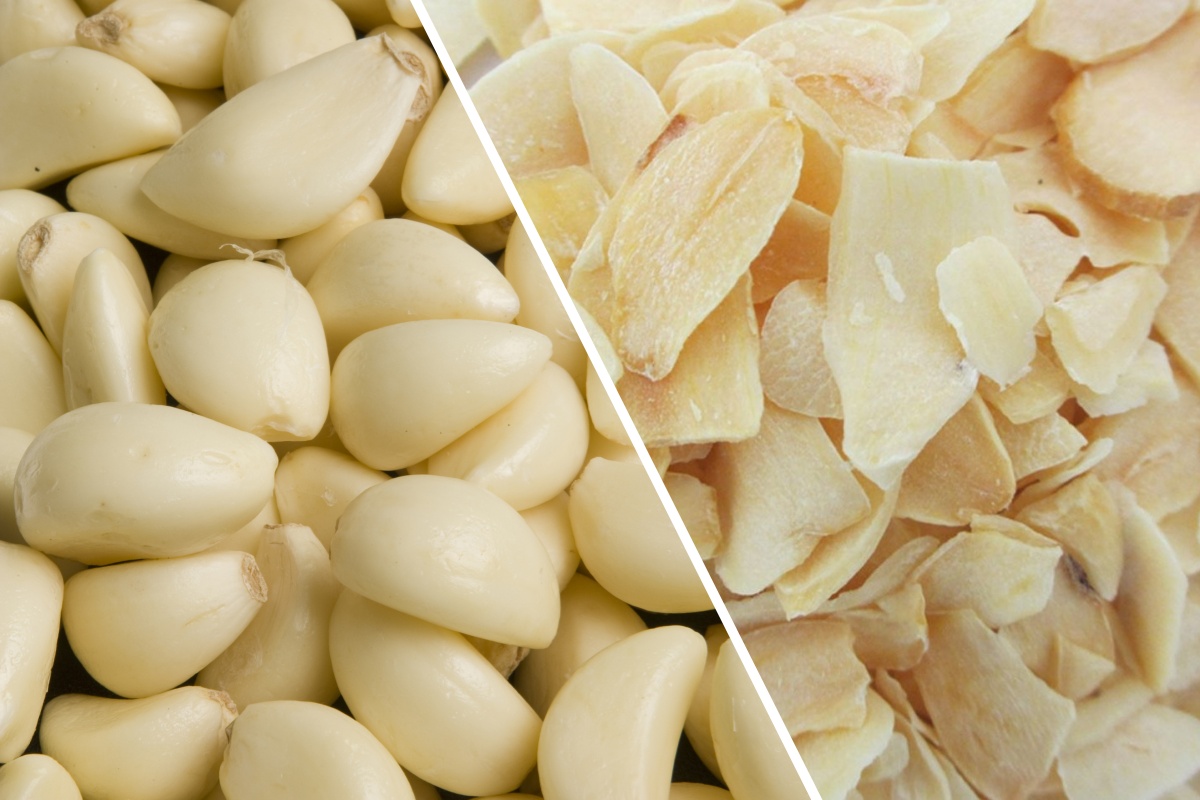
Flavor and Taste: This is where the two differ most. Fresh garlic contains abundant alliinase, an enzyme that produces allicin when the garlic is crushed—resulting in a pungent, sharp, and spicy flavor with a fresh, vegetal sweetness. Its texture is crisp and juicy. During the drying process, some of garlic's sharp sulfur compounds degrade or transform through enzymatic reactions, mellowing the flavor. Dried garlic develops a deeper, more concentrated taste, with hints of caramelized sweetness and roasted nuttiness, offering a more rounded, umami-rich profile.
Culinary Uses: Fresh garlic is ideal for quick, high-heat cooking and dishes that benefit from its bold, fresh flavor. It’s commonly minced or crushed for sautéing vegetables (like green beans or asparagus), seafood stir-fries, salad dressings, dipping sauces, or mixed into raw dishes like tomato salsa or bruschetta. It’s also a staple in marinades—such as Mediterranean-style spice blends—and garlic herb butter.
Dried garlic, with its mellow, concentrated flavor and sweet, roasted notes, is better suited for slow or dry-heat cooking. It shines in stews, oven-roasted vegetables or meats, hearty soups, and spice blends. It’s widely used in dry rubs, sausage fillings, and bread doughs, and serves as the base for garlic powder and garlic flakes—offering convenience and long shelf life for seasoning blends and snack applications.
Storage and Shelf Life: Fresh garlic should be stored in a cool, well-ventilated area and not refrigerated, as cold temperatures can trigger sprouting. Its shelf life is relatively short—around 1 to 2 months—and it’s susceptible to mold in humid environments. Dried garlic is much more storage-friendly. When kept in a dry, dark place (such as hung in mesh bags or stored in breathable containers), it can last 6 to 12 months without sprouting. However, it must be protected from moisture to prevent mold contamination.
Nutritional Value: Fresh garlic offers the highest levels of active allicin and vitamin C, giving it strong immediate antimicrobial and antioxidant effects. Dried garlic loses some vitamin C during dehydration, and some allicin breaks down into other sulfur compounds. However, these sulfur compounds are more stable under heat and retain antioxidant activity during cooking. In fact, dried garlic may provide more sustained antioxidant benefits in long-cooked dishes.
ShunDi Foods is a trusted and experienced supplier of high quality dried garlic products, serving food manufacturers, distributors, and wholesalers worldwide. With over 30 years in the industry, ShunDi offers a wide range of garlic formats—including flakes, granules, and powder. As a reliable OEM partner, we provide customized specifications and stable year-round supply, making it a preferred choice for global customers seeking natural garlic ingredients.