
How to Dehydrate Onions
Fresh onions have a limited shelf life, can sprout or rot if stored improperly, and require peeling, chopping, and handling that takes time in both household and industrial kitchens. Dehydrated onions offer a solution that addresses these concerns while preserving the distinct aroma and taste of the fresh bulb.
Dehydration is the process of removing water from food to extend its storage life and concentrate its flavor. Onions, with their high moisture content, are especially suitable for this treatment. Over time, different technologies have emerged for drying onions, with air drying and freeze drying being two of the most widely adopted. Each has its own unique process and produces onions with different qualities, which in turn makes them suitable for different uses.
How Air Dried Onions Are Processed
Air drying, also known as hot air drying, is one of the oldest methods of preserving onions and remains popular today because of its efficiency and cost effectiveness. The process begins with selecting fresh, high quality onions, which are then washed, peeled, and cut into uniform sizes such as slices, flakes, or cubes. Uniformity is important because it ensures even drying and a consistent end product.
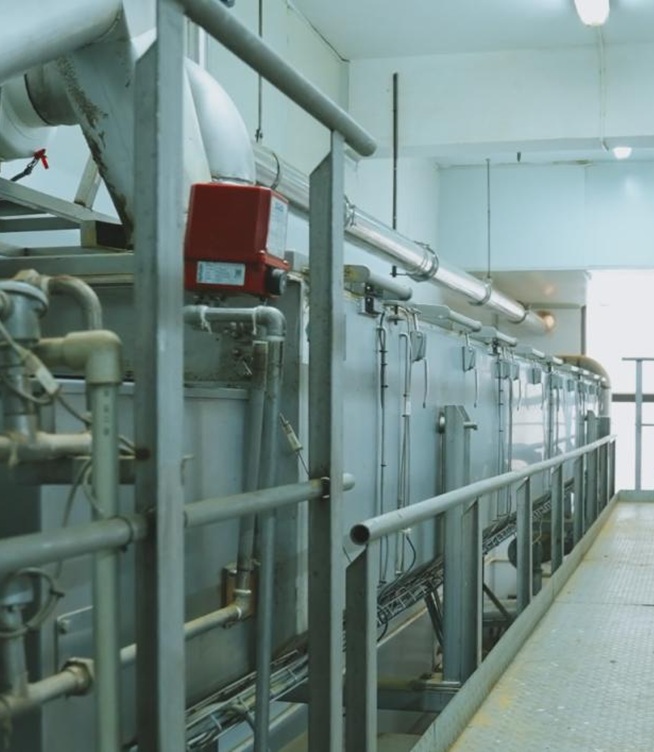
Once prepared, the onions are spread onto trays or moved along conveyor belts inside large drying chambers. Warm air circulates through the chambers, gradually drawing out moisture from the onion pieces. This drying is carefully controlled to avoid overheating, which could burn or excessively darken the onions. Over the course of several hours, the onions lose the majority of their water content, becoming lightweight, brittle, and shelf stable.
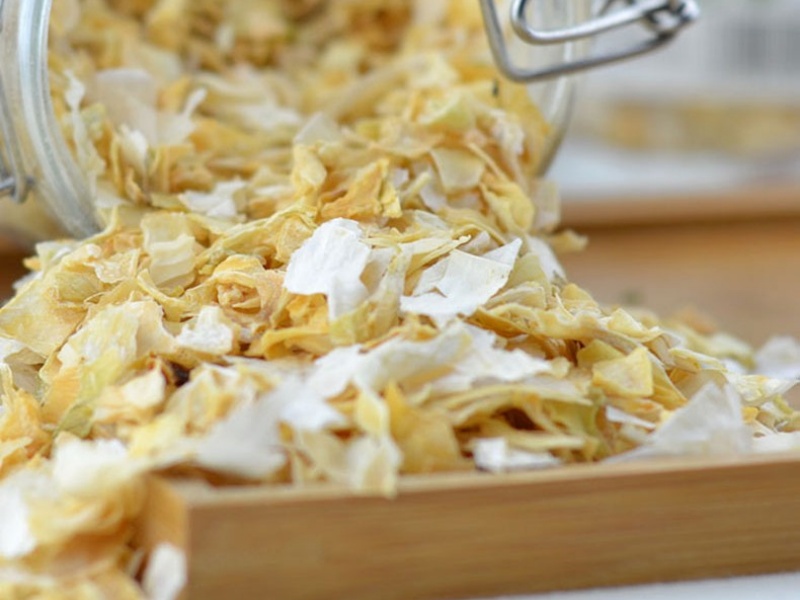
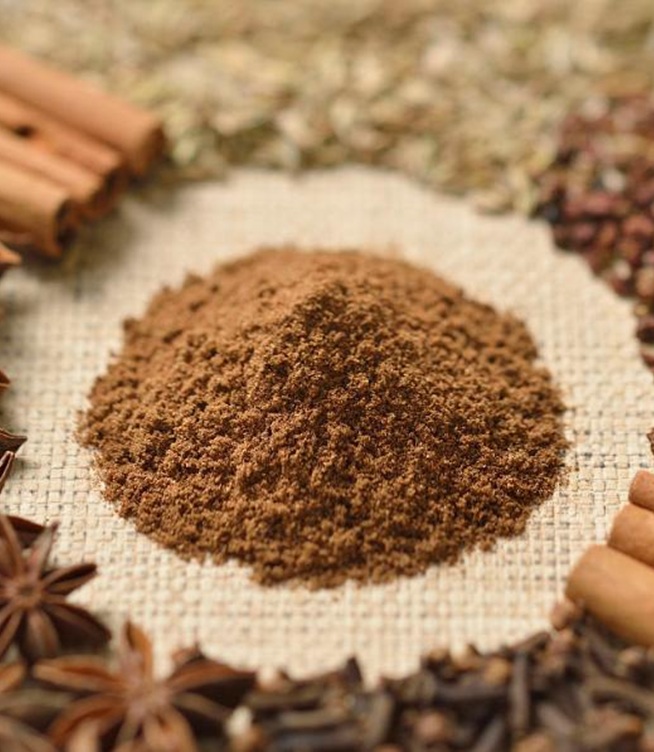
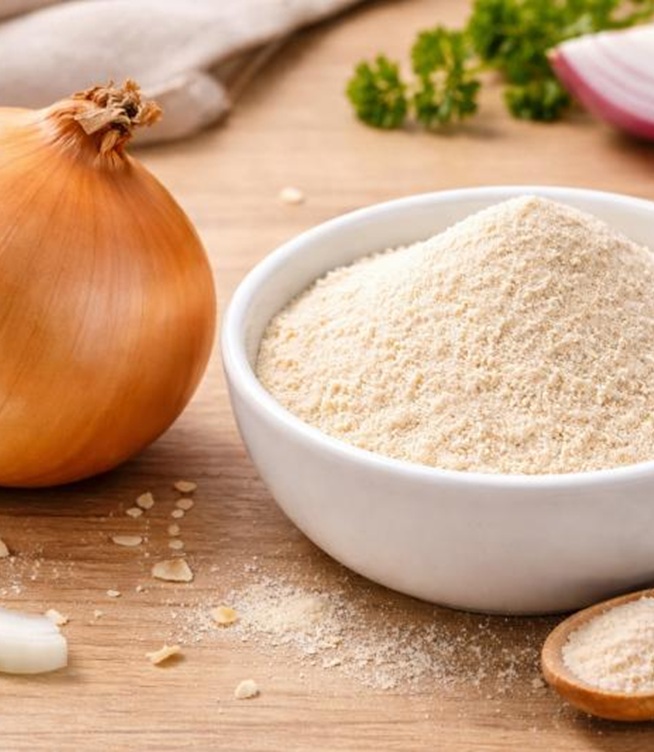
The final product has a distinct aroma and flavor. Air dried onions usually develop a slightly toasted or roasted note, since the exposure to heat causes natural sugars to caramelize lightly. Their color tends to be more muted compared with fresh onions, shifting from bright white or yellow to pale cream or golden brown. However, what they may lose in vibrancy they make up for in flavor concentration. Air dried onions are particularly suited for grinding into granules or powders, making them easy to incorporate into spice blends, instant soup bases, or sauces.
Because the air drying process is relatively simple and economical, it allows for large scale production and wide availability. This is why air dried onions are the most common type of dehydrated onions used in everyday cooking and industrial applications alike.
How Freeze Dried Onions Are Processed
Freeze drying is a more advanced and delicate method of dehydration. The process starts with freshly harvested onions that are carefully washed, peeled, and cut into the desired shape. These pieces are then rapidly frozen at extremely low temperatures, locking in their natural structure and nutrients.
Once frozen, the onions are placed into a vacuum chamber. Inside, the temperature and pressure are carefully controlled so that the ice crystals within the onion skip the liquid phase and transform directly into vapor. This process, known as sublimation, is what sets freeze drying apart from other methods. Because the onions never experience high heat, their flavor compounds, vitamins, and even their natural appearance remain largely intact. The resulting product is light, crisp, and porous.
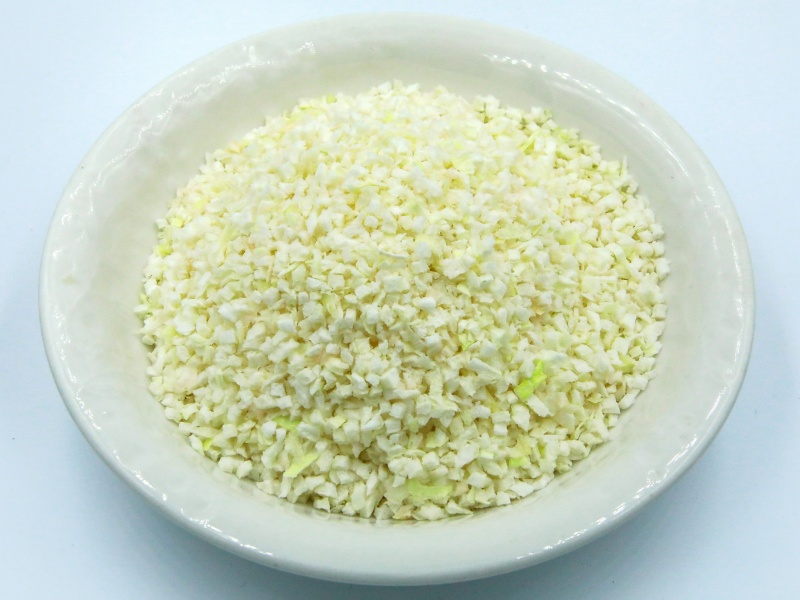
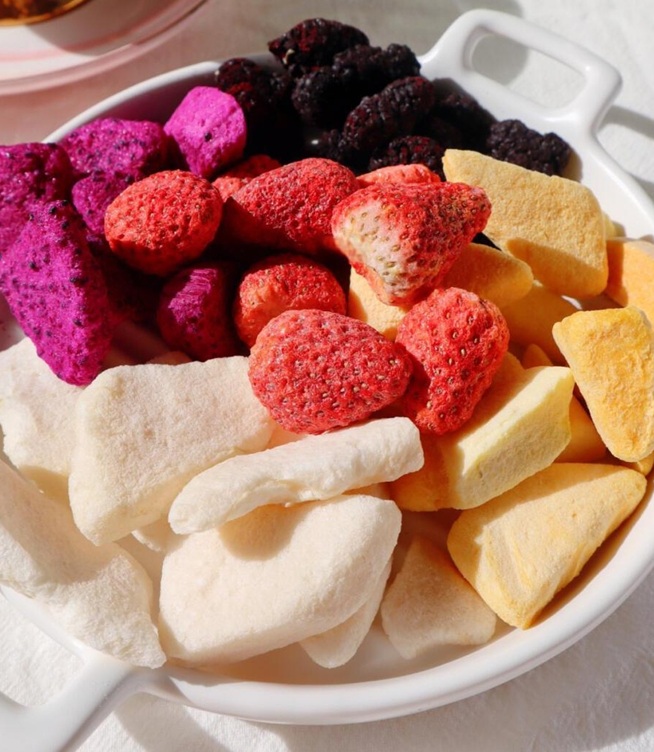
Unlike air dried onions, freeze dried onions closely resemble fresh onions in both color and shape. Their taste is bright and fresh, with little to no caramelization. One of their most important qualities is the ability to rehydrate quickly. When water or broth is added, freeze dried onions regain much of their original texture and flavor, making them an excellent choice for applications where a “just-chopped” onion effect is desired.
Freeze dried onions are often seen as a premium option because the process requires more sophisticated technology and greater energy input. However, the quality of the final product makes them valuable for applications in high end food manufacturing, ready-to-eat meal kits, and health focused products where freshness is essential.
Applications of Different Dehydrated Onions
In the food industry, air dried onion powders and granules are staples in spice manufacturing, used in everything from barbecue seasonings to instant noodles. Snack producers rely on them to flavor chips, crackers, and roasted nuts. Processed meat manufacturers add onion powders to sausages and patties for a consistent flavor profile. Freeze-dried onions, meanwhile, are commonly used in premium soups, frozen pizzas, and ready-to-cook meals where both flavor and appearance matter. Because they rehydrate effectively, they allow manufacturers to create products that taste freshly prepared.
The growing demand for convenience foods, plant-based meals, and global flavors has only increased the importance of dehydrated onions in both domestic and international markets. Their versatility ensures that no matter the culinary tradition, there is a place for dried onions.
Advantages of Dehydrated Onions
First and foremost is shelf life. Fresh onions, even under proper storage conditions, will sprout or spoil within a few months. Dehydrated onions, by contrast, can last many months or even years when stored correctly, offering significant benefits for both households and manufacturers.
Another major advantage is convenience. For busy households, dehydrated onions mean no peeling, chopping, or watery eyes—just quick and easy flavor enhancement. For industrial kitchens, they eliminate variability in raw materials and reduce labor costs, since dehydrated onions come in ready-to-use formats that integrate directly into production lines.
Consistency is also crucial. Dehydrated onions deliver a uniform flavor intensity, ensuring that every batch of soup, snack, or seasoning blend tastes the same. This level of standardization is vital for large-scale food companies whose customers expect identical taste experiences worldwide.
From a logistics perspective, dehydrated onions are lighter and more compact than fresh onions, reducing transportation and storage costs. They also minimize waste, since every part of the dehydrated onion is usable.
ShunDi’s Dehydrated Onions
At ShunDi Foods, dehydrated onions are one of our signature product lines, supported by decades of experience and a commitment to quality. Established in 1995, ShunDi has grown into a leading producer of freeze dried and air dried ingredients in China, with a strong reputation among global food manufacturers.
Our dehydrated onion range includes flakes, granules, powders, and custom cut pieces in both AD and FD formats. These products are certified Halal and Kosher, making them suitable for a wide range of international markets. With over 40 countries served, we bring not only reliable ingredients but also the technical expertise and global perspective to help customers succeed.
For businesses looking for a dependable source of dehydrated onions, ShunDi Foods offers more than just ingredients—we deliver consistency, quality, and partnership. By combining sustainable farming, advanced processing, and international food safety standards, we ensure that the natural flavor of onions continues to enrich kitchens and industries around the world.